Separate What Happened From What You May Be Assuming
Start with what you can actually observe, then separate that from interpretations, possible explanations, and what still remains unknown.
You noticed the shift.
Replies are slower. They initiate less. Plans feel less certain. Maybe they're quieter or less engaged with you in person than they were before.
Something changed — and now you don't know whether to reach out, ask what's changed, give space, wait, or step back.
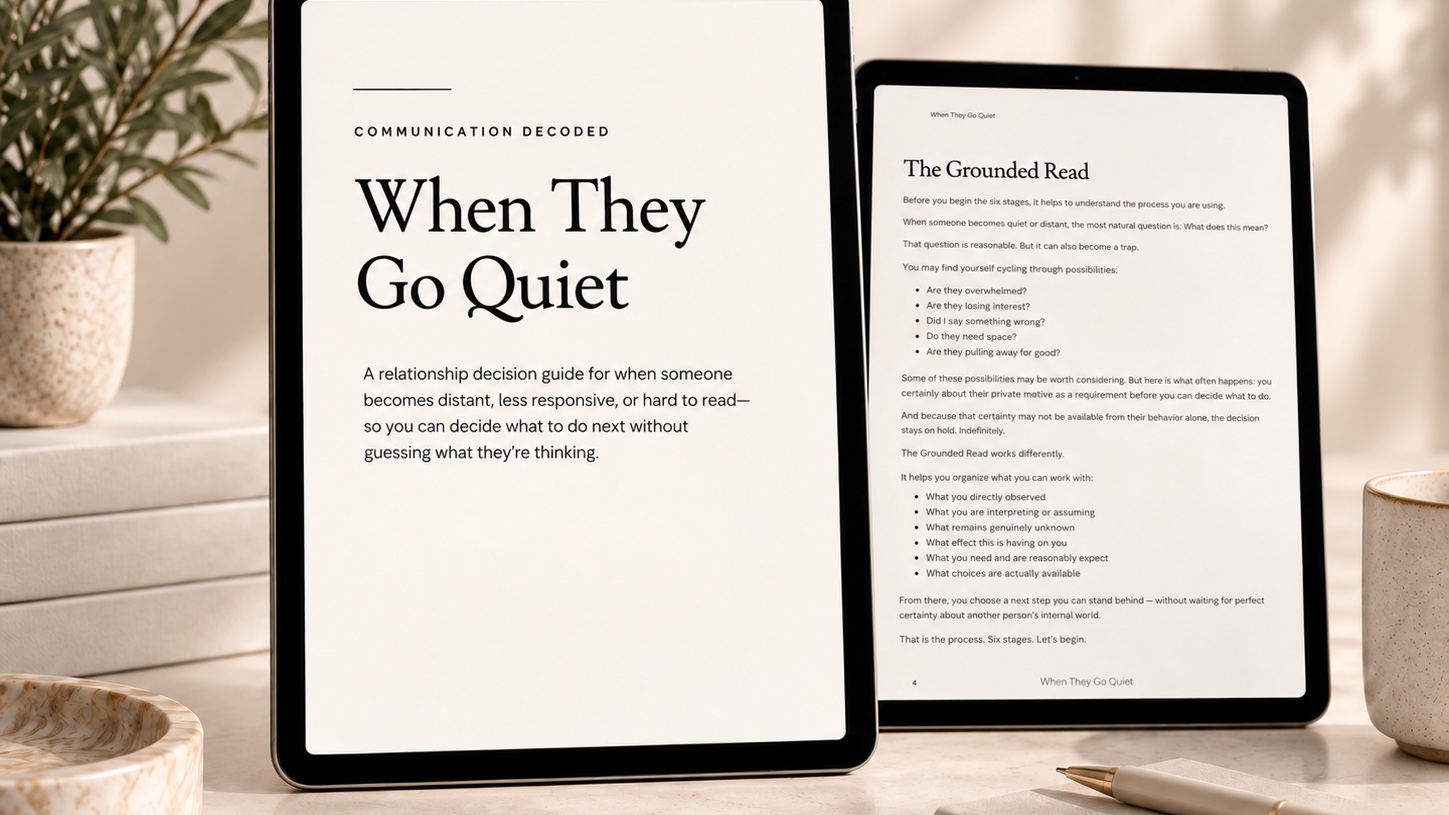
When They Go Quiet helps you work through that decision using the information you actually have — without pretending to know what they're thinking.
Relationship content can help you understand why someone might pull away. You may have read about attachment styles, emotional availability, or fear of closeness — and some of it may genuinely help you make sense of what you're seeing.
But understanding a possible pattern doesn't automatically tell you what to do in your specific situation.
You can have several plausible explanations and still be left with the same practical question:
Which response actually fits this situation?
You want to respond well — not just react. You don't want to send a message you'll regret or give space indefinitely without knowing what you're waiting for.
What may still be missing isn't another explanation. It's a structured way to move from:
“Something changed.”
to:
“Here's the response I can stand behind.”
When They Go Quiet is a self-guided relationship decision guide built for one specific moment: someone in a romantic connection or relationship has become quieter, more distant, less responsive, or harder to read — and you can't confidently decide what to do about it.
Using The Grounded Read and its six-stage GROUND Method, the guide helps you work through three things:
Start with what you can actually observe, then separate that from interpretations, possible explanations, and what still remains unknown.
Get clear on what you need, what you reasonably expect in this connection, and what the current situation is showing you. Then compare realistic responses and the tradeoffs of each.
Choose a response you understand and can stand behind using the information you have now. Then identify what future behavior, communication, or new information would give you a real reason to revisit that decision.
That next step might be reaching out.
It might be asking for clarity, giving intentional space, observing longer, expressing a need, setting a limit, reassessing an expectation, or stepping back.
Communication is one possible response. It isn't automatically the answer.
The goal isn't certainty about another person.
It's a clearer basis for deciding what you want to do next.
Each stage has a specific job in the decision.
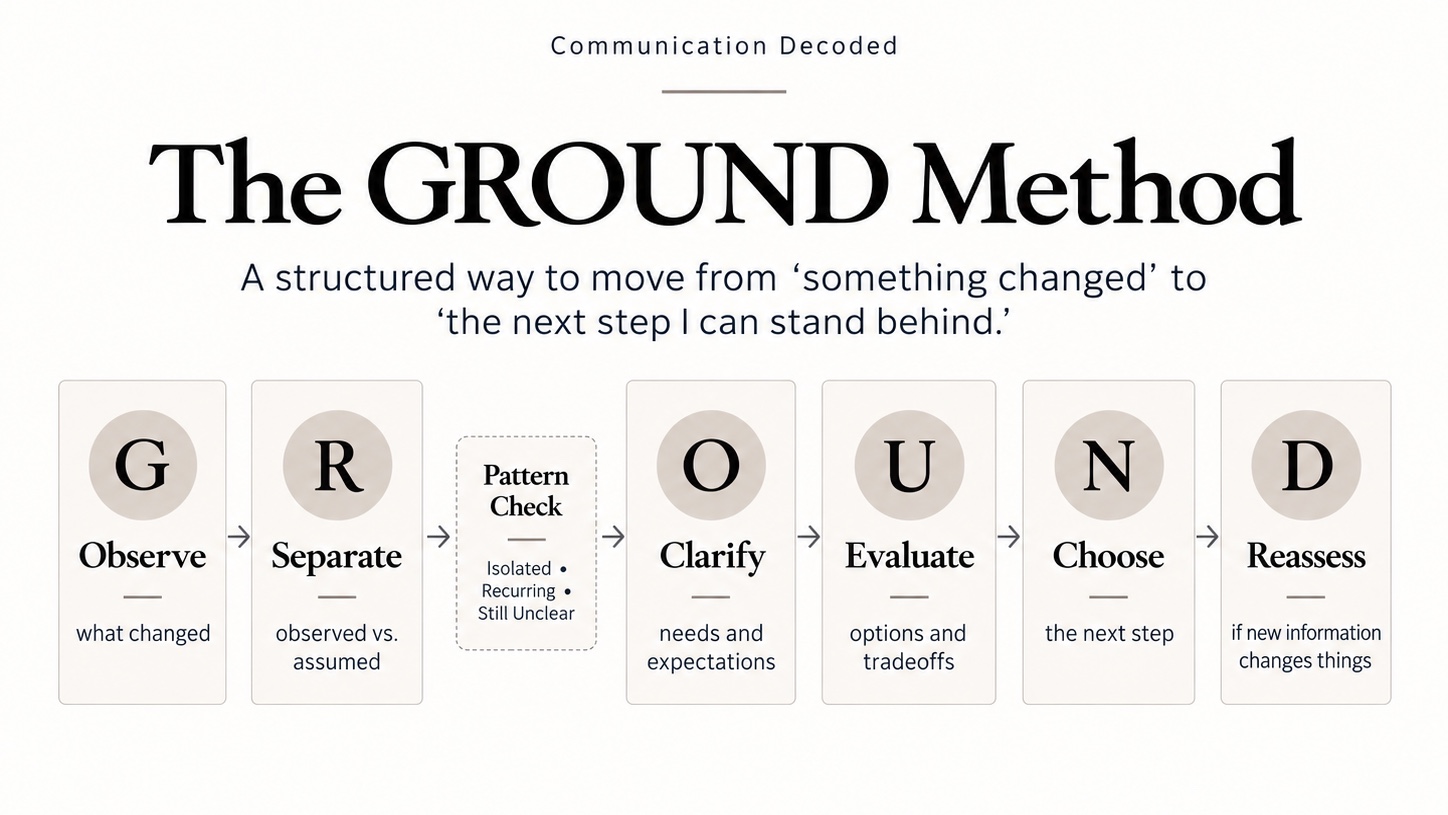
What happened that I can directly point to?
Identify the observable change — the words, behavior, timing, messages, plans, or other events you can actually describe before deciding what they mean.
What do I know, what am I interpreting, and what can I not currently confirm?
Separate what was directly observed from your interpretations, other possible explanations, and what genuinely remains unknown.
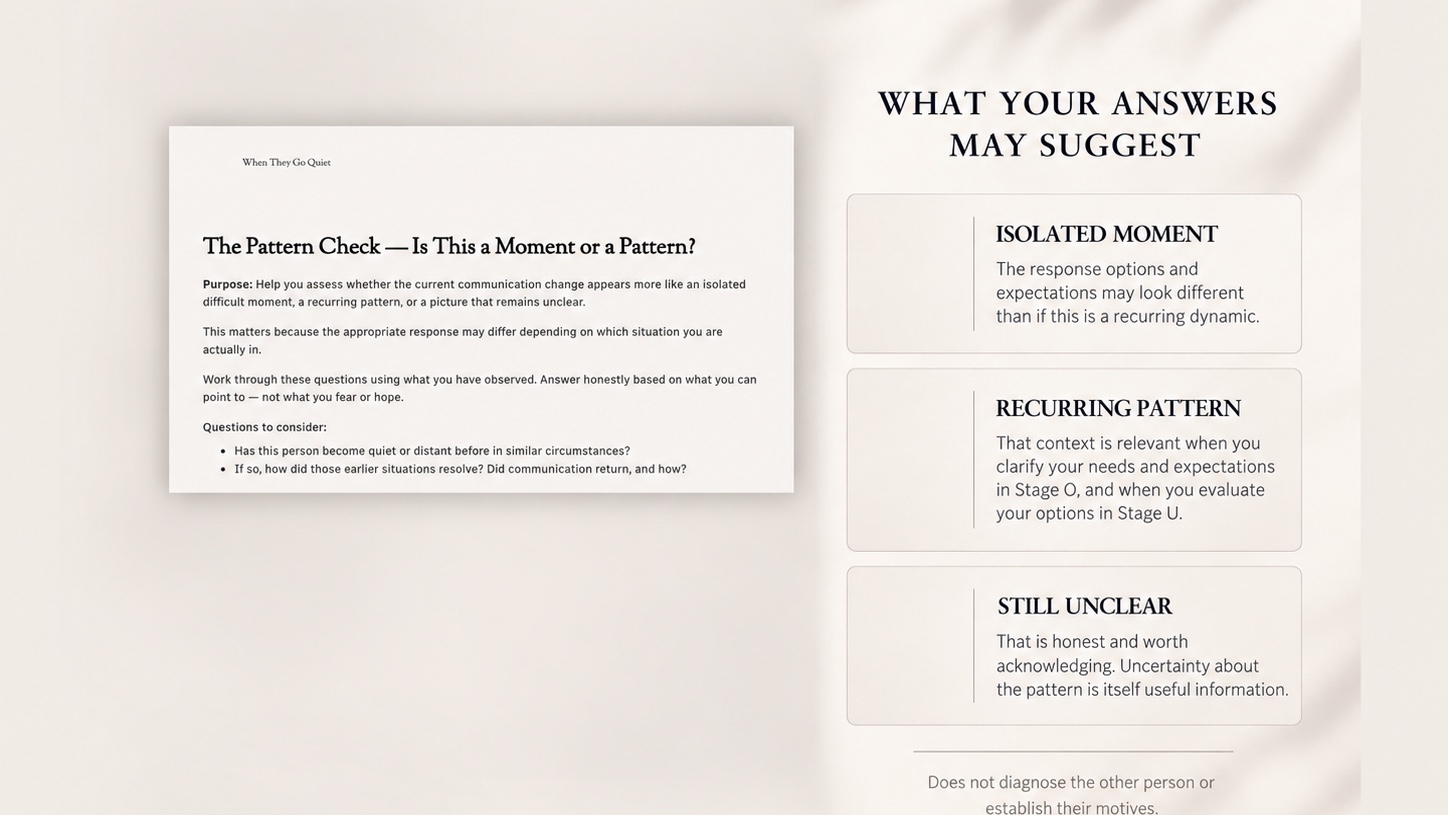
Between Stages R and O, you'll use The Pattern Check to consider whether the communication shift appears isolated, recurring, or still unclear.
It is part of the decision process — not a diagnostic test and not a separate bonus.
What matters to me here, and what do I reasonably need or expect?
Clarify how the situation is affecting you, what you need, what you value, and what expectations make sense given the relationship context and what has actually been established.
What can I realistically do, and what might each option protect, risk, communicate, or help me learn?
Compare the responses genuinely available to you rather than assuming one answer fits every situation.
Which response can I understand and stand behind in this situation?
Choose a next step that reflects what you observed, what remains uncertain, what you need, and what is within your control.
What would reasonably cause me to revisit this decision?
Identify what future behavior, communication, new information, passage of time, or change in circumstances would give you a legitimate reason to reassess.
A continuous worked example
Jordan and Alex are a realistic but fictional scenario carried through the process so you can see how the questions and distinctions apply before working through your own situation.
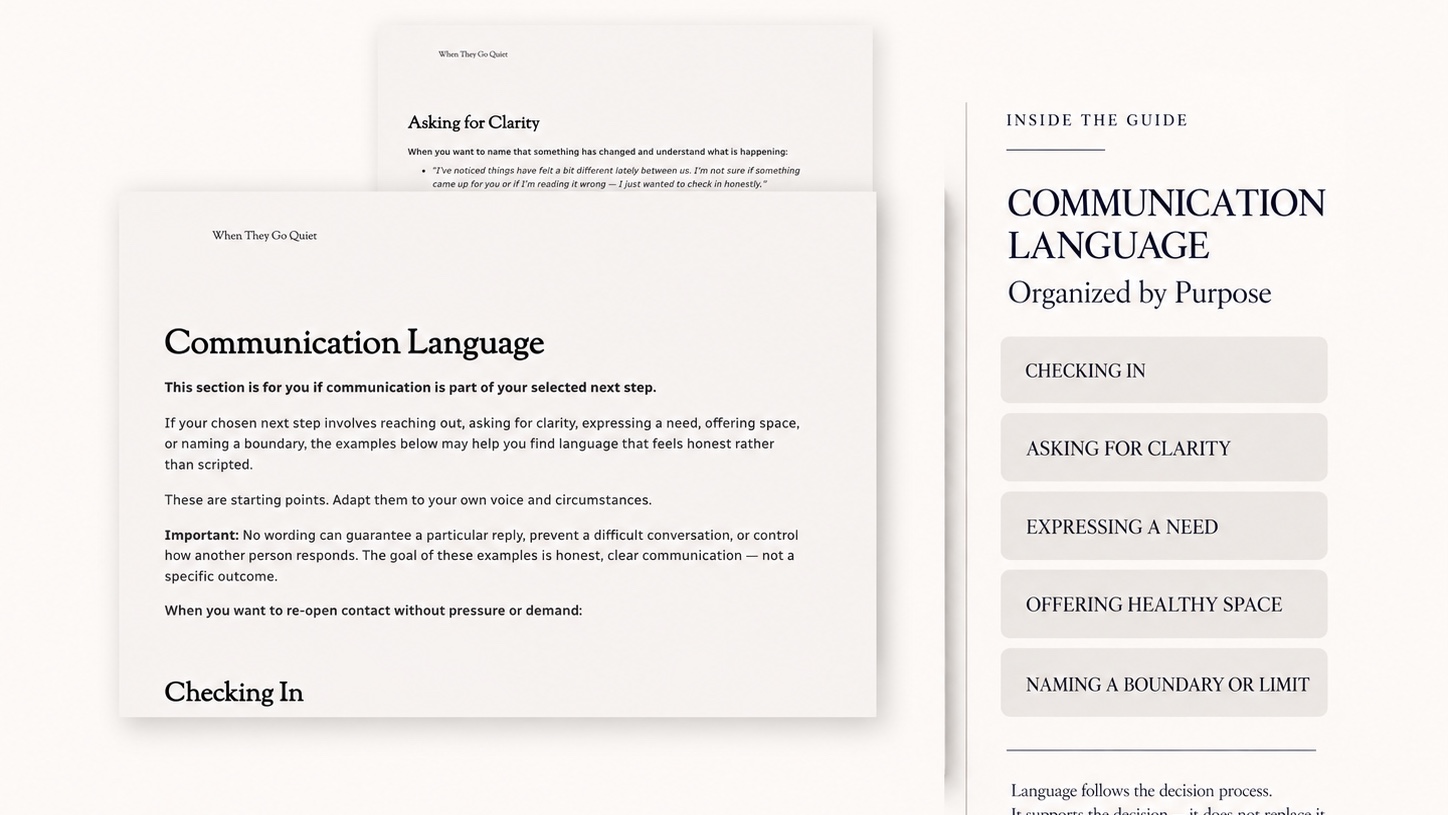
Communication Language organized by purpose
If communication is part of your selected next step, you'll find practical starting points for:
The language comes after the decision process.
The words support the decision — they don't replace it.
The situation itself may still contain uncertainty.
What changes is that you have a more deliberate basis for deciding what to do with it.
Communication Decoded is an educational relationship-communication brand, and When They Go Quiet is a self-guided educational resource.
If your situation involves threats, controlling behavior, coercion, abuse, or personal-safety concerns, please seek individualized support from a qualified professional, a trusted person in your life, or a relevant support service in your area.
When They Go Quiet
A finished 29-page digital relationship decision guide for when someone becomes distant, less responsive, or hard to read.
Your guide includes:
Instant digital access after purchase.
Download the guide to your phone, tablet, or computer.
By completing your purchase, you agree to the Terms of Service and Refund Policy and acknowledge the Privacy Policy.
No. It doesn't prescribe one answer for every situation.
It helps you evaluate realistic options — including reaching out, asking for clarity, giving intentional space, observing longer, expressing a need, setting a limit, reassessing an expectation, or stepping back — so you can decide which response may fit your situation.
Relationship resources can offer useful explanations or communication ideas.
When They Go Quiet focuses on the practical decision that comes next: given what is actually happening in my situation, what response makes sense for me now?
The details of your situation matter.
You work with your own observations, relationship context, needs, reasonable expectations, available options, and Pattern Check rather than being given one universal response.
The guide provides a flexible decision structure — not individualized professional advice.
No.
The change you're trying to understand may show up through texting, calls, initiation, plans, follow-through, conversational reciprocity, in-person engagement, or another observable shift from the prior pattern.
And the Communication Language comes after the decision process, if communication is actually part of the next step you choose.
The guide doesn't promise a perfect or risk-free choice.
You choose a reasoned next step using the information available to you, then define what future behavior, communication, new information, passage of time, or change in circumstances would give you a legitimate reason to reassess.
Your first decision doesn't have to pretend the future is already known.
Both.
When They Go Quiet is for someone in a romantic connection or relationship where the other person has become quieter, more distant, less responsive, or harder to read.
It is focused on that specific situation rather than every possible relationship problem.
You don't need certainty about what someone else is thinking before you can make a decision of your own.
Work from what you can observe.
Clarify what you need.
Compare the responses available to you.
Choose a next step you can stand behind.
When They Go Quiet
$19 one-time payment · Instant digital access after purchase
Downloadable to phone, tablet, or computer.
By completing your purchase, you agree to the Terms of Service and Refund Policy and acknowledge the Privacy Policy.